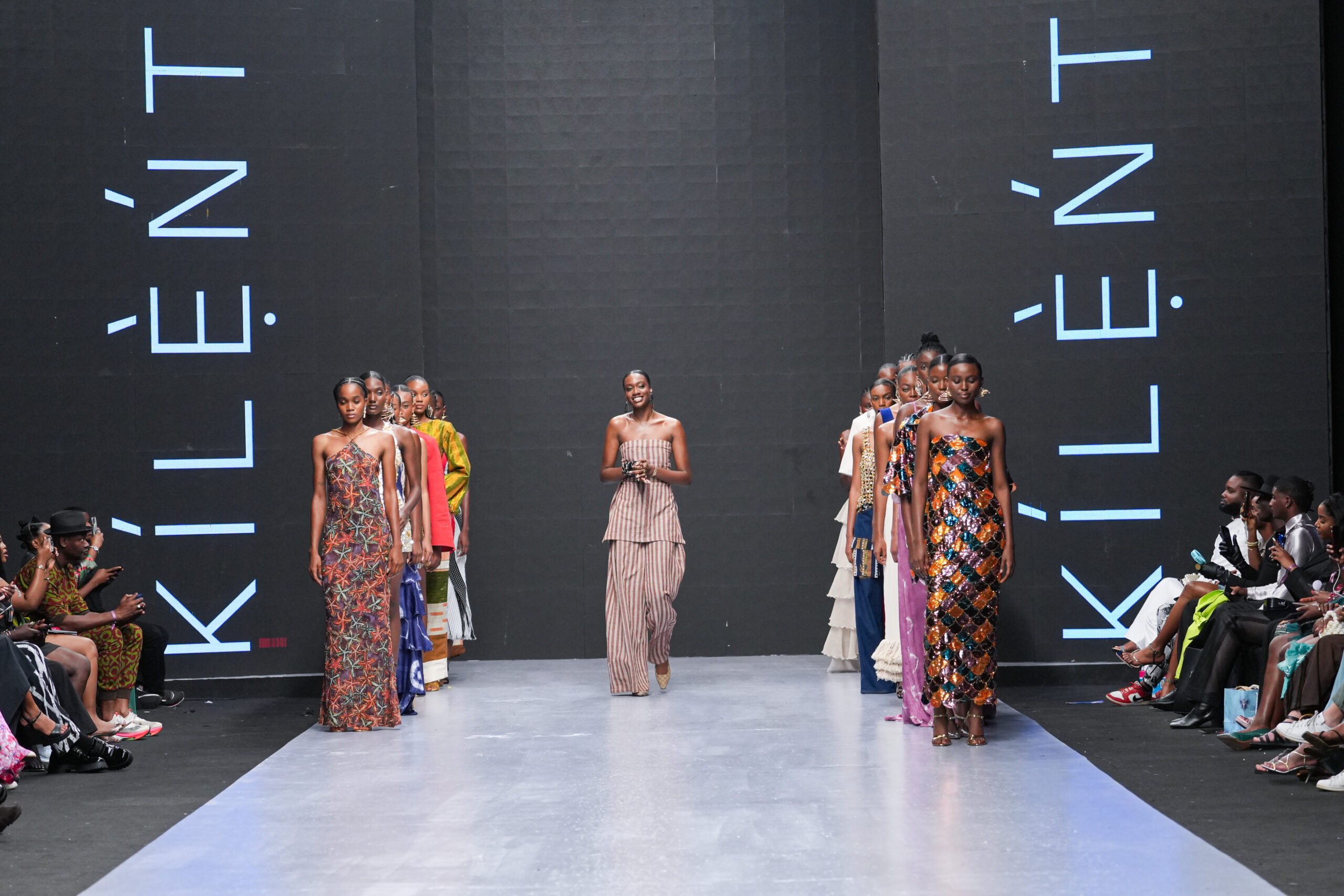
In the buzzing ateliers and creative studios from Lagos to London, a quiet revolution is underway, one led not by fleeting trends, but by designers redefining what it means to create from the continent. Among this new wave of Nigerian designers carving a global path is Michelle Adepoju, the visionary behind Kílẹ̀ńtàr, a brand whose very name asks a question that resonates deeply in Yoruba markets and beyond: “Kí lẹ̀ ń tà?”, What are you selling?
For Adepoju, that question isn’t simply transactional; it’s philosophical. It is an invitation to share, to tell stories, and to exchange culture through craftsmanship. Kílẹ̀ńtàr is her answer, a brand rooted in heritage yet reaching confidently into the future, balancing the rhythm of tradition with the cadence of modernity.
Born and raised in the United Kingdom to Nigerian parents, Adepoju grew up surrounded by the textures, colours, and cadence of Yoruba culture. Her mother’s fabrics, her father’s stories, and her own curiosity for art all converged into a fascination with identity and transformation. As a teenager, she was already remixing the old into something new, repurposing second-hand finds into one of a kind pieces that hinted at her future in circular design.

After completing her studies in Art and Marketing, Adepoju’s search for deeper meaning took her beyond the classroom and across West Africa. From the indigo-dyeing vats of Nigeria to the mask-making traditions of Burkina Faso and the intricate weaves of Côte d’Ivoire, she traced the threads of African craftsmanship back to their roots. Those travels would become the heartbeat of Kílẹ̀ńtàr, a “love letter,” as she describes it, to the artisans who carry ancestral techniques in their hands and stories in their hearts.
Founded in 2019, Kílẹ̀ńtàr sits at the intersection of culture and contemporary design. Each piece is a study in contrasts: soft yet strong, minimal yet expressive, modern yet deeply rooted. The brand relies on hand-dyeing, weaving, and embroidery techniques passed down through generations, preserving the integrity of tradition while adapting it for today’s woman. The result is clothing that feels both personal and political, wearable art that honours the past but lives firmly in the present.
In an era when “sustainability” is often reduced to marketing jargon, Kílẹ̀ńtàr treats it as lived philosophy. The brand’s slow production process, use of natural dyes, and reliance on small artisan communities all reflect Adepoju’s commitment to circular design. But it’s not just about process, it’s about perspective. To create sustainably, she argues, is to respect the hands that make and the culture that inspires.

Kílẹ̀ńtàr also represents a broader shift in the global fashion conversation, one increasingly shaped by Nigerian and African voices. As the international spotlight widens, designers like Adepoju are not asking for inclusion; they are setting the terms of engagement. Their work doesn’t mimic the West, it expands fashion’s vocabulary. The rise of brands like Kílẹ̀ńtàr underscores a cultural self-assurance that is unapologetically local yet globally resonant.
For Adepoju, every collection begins with the same question that inspired her brand’s name. But what she’s selling isn’t just clothing , it’s connection. A bridge between old worlds and new possibilities, between the hum of a Lagos market and the stillness of a London studio.
In the end, Kí lẹ̀ ń tà? becomes less a question and more a declaration, that African design, in all its complexity and craftsmanship, is not emerging, it has arrived.