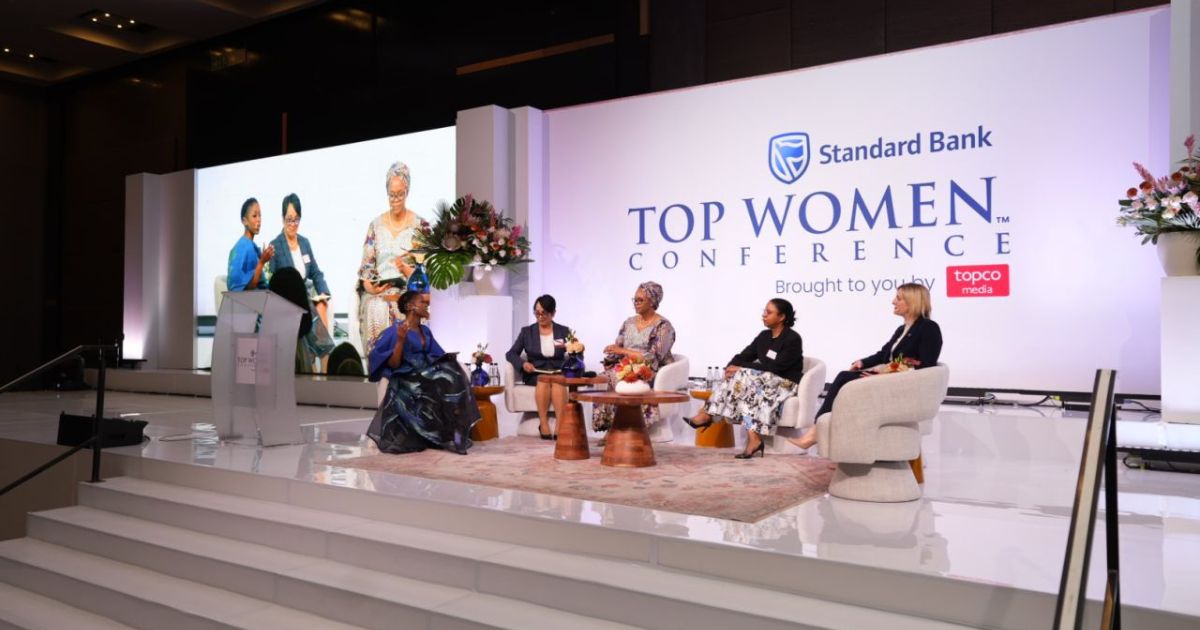
For two days in Sandton, the conversation around women in business moved beyond the familiar language of empowerment and towards something more practical: what needs to change for women to have greater economic influence.
The Standard Bank Top Women Conference returned to the Sandton Convention Centre on 8 and 9 September under the theme Her Power. Africa’s Future. Amplifying Women-Led Growth. Now in its tenth year, the conference brought together business leaders, entrepreneurs, policymakers and changemakers to examine the realities shaping women’s participation in Africa’s economy.
What emerged over the two days was a conversation less concerned with celebrating a handful of women who have managed to succeed against the odds, and more interested in questioning why the odds remain so difficult in the first place.
The economic argument was impossible to ignore.
Opening the programme, Simone Cooper, Head of Business and Commercial Banking South Africa at Standard Bank Group, placed women-led businesses firmly within the broader conversation about Africa’s economic future. The issue, she argued, is no longer whether women have the ability to contribute to economic growth. That is already evident. The more pressing question is whether the systems surrounding them provide sufficient access to finance, markets, networks, technology and opportunities to lead and scale.
It is an important distinction. Women do not simply need encouragement to participate in the economy; they need the infrastructure that makes meaningful participation possible.
That idea carried through much of the conference, particularly in discussions around entrepreneurship. Women-led businesses were considered not only in terms of the founders behind them, but in terms of what allows those businesses to move beyond survival and into sustainable growth.
Networks featured prominently in that conversation. The conference explored how relationships can become practical business assets through referrals, partnerships, knowledge-sharing and access to new markets. There was also a strong emphasis on moving from mentorship to sponsorship, recognising that advice is valuable but advocacy can open doors that talent alone cannot always reach.
For women building businesses, this distinction matters. A mentor may offer guidance, while a sponsor can recommend your business, make an introduction, advocate for you in a room you are not in or connect you to an opportunity that changes the trajectory of your career.
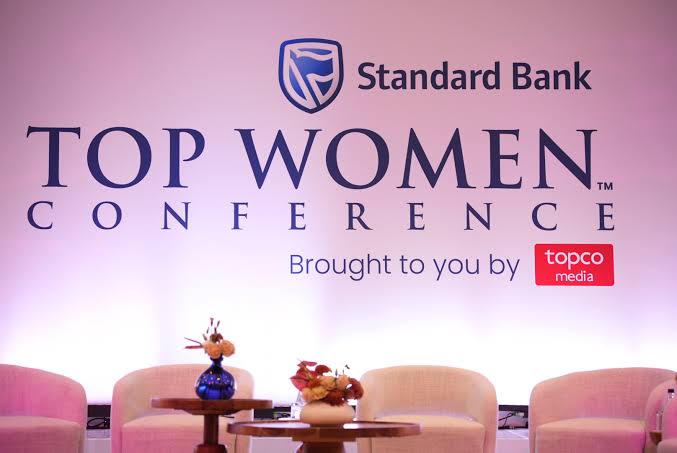
The conference put this thinking into practice through Business MatchMaking and PitchPower Networking. Rather than leaving networking as a vague promise of exchanging business cards, these initiatives were designed to create direct connections between women-led businesses, corporates, potential partners and investors.
It was one of the more compelling aspects of the conference because it reflected the larger message of the event: conversations have value, but access is where conversations begin to create change.
Education was another important part of that equation.
Deputy Minister for Higher Education and Training, Hon. Dr Nomusa Dube-Ncube, addressed the relationship between education and employability, with a particular focus on ensuring that young women are prepared for a changing economy. Her address looked at the gap between higher education and the world of work, while highlighting opportunities in STEM, digital and green sectors, entrepreneurship and work-integrated learning.
The argument extends well beyond employment statistics. If women are to occupy more positions of influence in the future, the pipeline has to be strengthened long before they reach the boardroom.
The conference highlighted the economic consequences of failing to do so. Research referenced during the event included McKinsey’s estimate that Africa could add US$316 billion to its GDP by reaching the gender-parity performance of its best-performing country, while research from the Mastercard Foundation has estimated that greater economic participation by young women could contribute an additional US$287 billion and create 23 million jobs by 2030.
These figures place women’s economic participation in a different context. It is not simply a conversation about fairness, although fairness matters. It is also a conversation about what Africa stands to gain when more women are able to participate fully in its economies.
Dr Naledi Pandor brought another dimension to the discussion in her keynote address, The Future We Inherit, The Future We Create. Her address considered the pressures placed on women in leadership and the tendency to frame professional ambition as something that must come at the expense of personal fulfilment, family or wellbeing.
Her message was not about asking women to become smaller versions of themselves in order to succeed. Instead, it considered what sustainable leadership can look like when women define success on their own terms and build the support structures needed to sustain it.
It was a particularly relevant conversation in a professional culture that can still reward constant availability and associate achievement with how much one is willing to sacrifice.
Day two shifted towards the systems surrounding women once they enter the workplace.
Anne Githuku-Shongwe, UNAIDS Regional Director for Eastern and Southern Africa, opened the day’s programme with a discussion drawing lessons from the global HIV response. The emphasis was on coalitions and collective action rather than the idea of the individual hero carrying change alone.
From there, conversations turned towards some of the more difficult realities facing women at work, including the impact of artificial intelligence and automation on entry-level employment, workplace cultures that allow harassment and gender-based violence, and the question of what meaningful inclusion looks like after women have gained access to an organisation.
The future of work featured strongly, particularly as artificial intelligence continues to change the nature of jobs and the skills required to perform them. The conversation was not simply about whether women will use AI, but whether they will have a role in building, designing and governing the technologies shaping the economy.
That distinction is increasingly important. If women are absent from the development and decision-making surrounding new technologies, existing inequalities risk being reproduced in industries that are still taking shape.
Leadership was examined through a similarly practical lens.
Taelo Mojapelo, CEO of bp Southern Africa, spoke about creating structured pathways for women into senior decision-making positions, while another conversation examined the legal profession, where women account for a substantial proportion of new entrants but remain under-represented at executive level.
The gap between entering a profession and reaching its highest levels is one that many industries continue to grapple with. Representation at entry level does not automatically translate into representation where decisions about strategy, investment, people and resources are made.
That is where the conference’s broader message about systems became particularly relevant.
Women should not have to rely on extraordinary resilience simply to navigate ordinary professional environments.
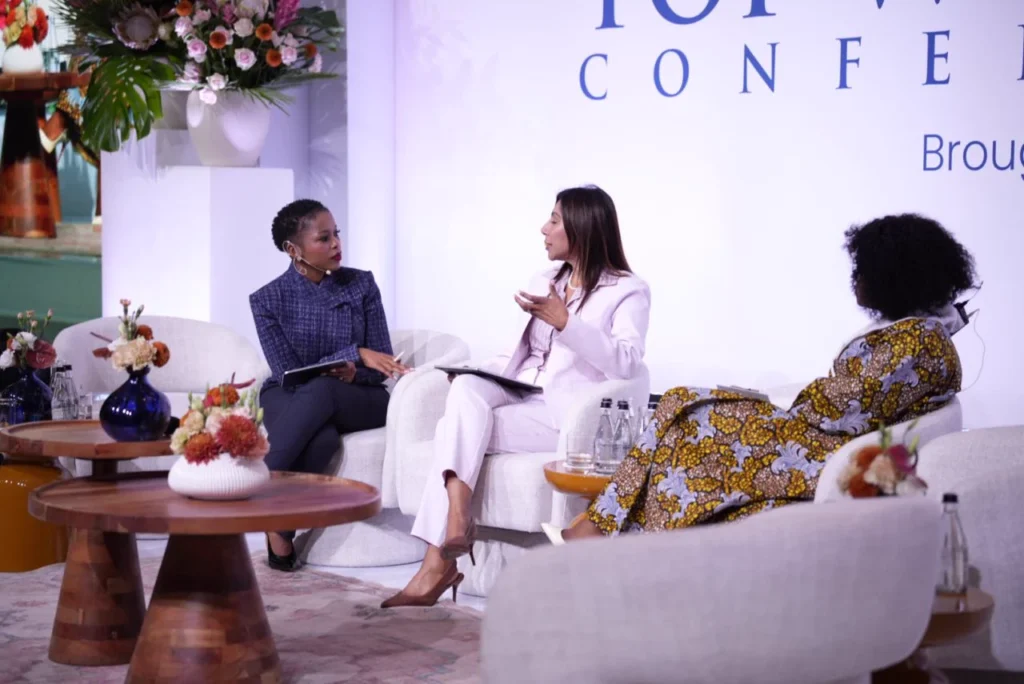
The conference also made room for entrepreneurship in its most tangible form through the EmpowHER Pitching Den Grand Finale. Lesego Seloane of Ronewa Creations, Kiki Sepuru of Afrique360 Solutions and Refilwe Moreno Barahona of Tsogomath, the three regional winners of the 2026 EmpowHER Development Series, pitched their businesses live before an expert judging panel for the Top Women EmpowHER Entrepreneur of the Year title.
The initiative offered a fitting conclusion to a conference so focused on access. These were not simply women being celebrated for having entrepreneurial ambitions; they were founders being given a platform to put their businesses in front of decision-makers.
And that distinction captures much of what made this year’s conference relevant.
There is no shortage of conversations about women and leadership. What is more difficult is creating the conditions that allow those conversations to translate into economic participation, commercial opportunities and lasting influence.
The Standard Bank Top Women Conference 2026 placed that challenge firmly on the table. From education and entrepreneurship to technology, workplace culture and leadership, the message running through the two days was that women’s progress cannot depend solely on individual determination.
It requires stronger ecosystems.
It requires access to capital and markets. It requires networks that open doors rather than simply create introductions. It requires sponsors prepared to advocate for women when they are not in the room. It requires workplaces where women can advance without having to negotiate harassment, exclusion or outdated expectations. And it requires young women to be given the skills and opportunities to participate in industries that will define the next chapter of Africa’s economy.
Perhaps most importantly, it requires a shift in the question being asked.
Instead of asking how women can become more resilient in the face of barriers, the more useful question is why those barriers remain and what can be done to remove them.
That is where the theme Her Power. Africa’s Future. becomes particularly meaningful.
Because Africa’s future is not waiting for women to prove that they belong in it. Women are already building businesses, leading institutions, creating jobs, entering industries once closed to them and shaping the conversations that determine what comes next.
The work now is to make sure the systems around them are built to match that ambition.